
Es Tate built a new life with a new wife. Unfortunately, he forgot to tell his life insurance company, and a single forgotten form handed his entire policy to the woman he had divorced a decade earlier.

Meet Es Tate, our resident ghost. A well-meaning, dapper soul who made every estate planning mistake the rest of us can still avoid. He's fictional, but his horrors aren't. Each story is inspired by real court cases, with names and details changed for privacy.
The Facts
Es Tate was a federal employee, and like many federal employees, he carried life insurance through his job. While married to his first wife, Di Vorcée, he did the responsible thing and named her as the beneficiary of that policy.
A couple of years later, the marriage ended. The divorce was finalized, the property was divided, and Es Tate moved on. A few years after that, he met and married Tess Tator. They built a life together for the next six years. Es Tate had every reason to believe that, if anything happened to him, Tess would be taken care of.
But Es Tate never changed the beneficiary form on his life insurance. It still named Di Vorcée.
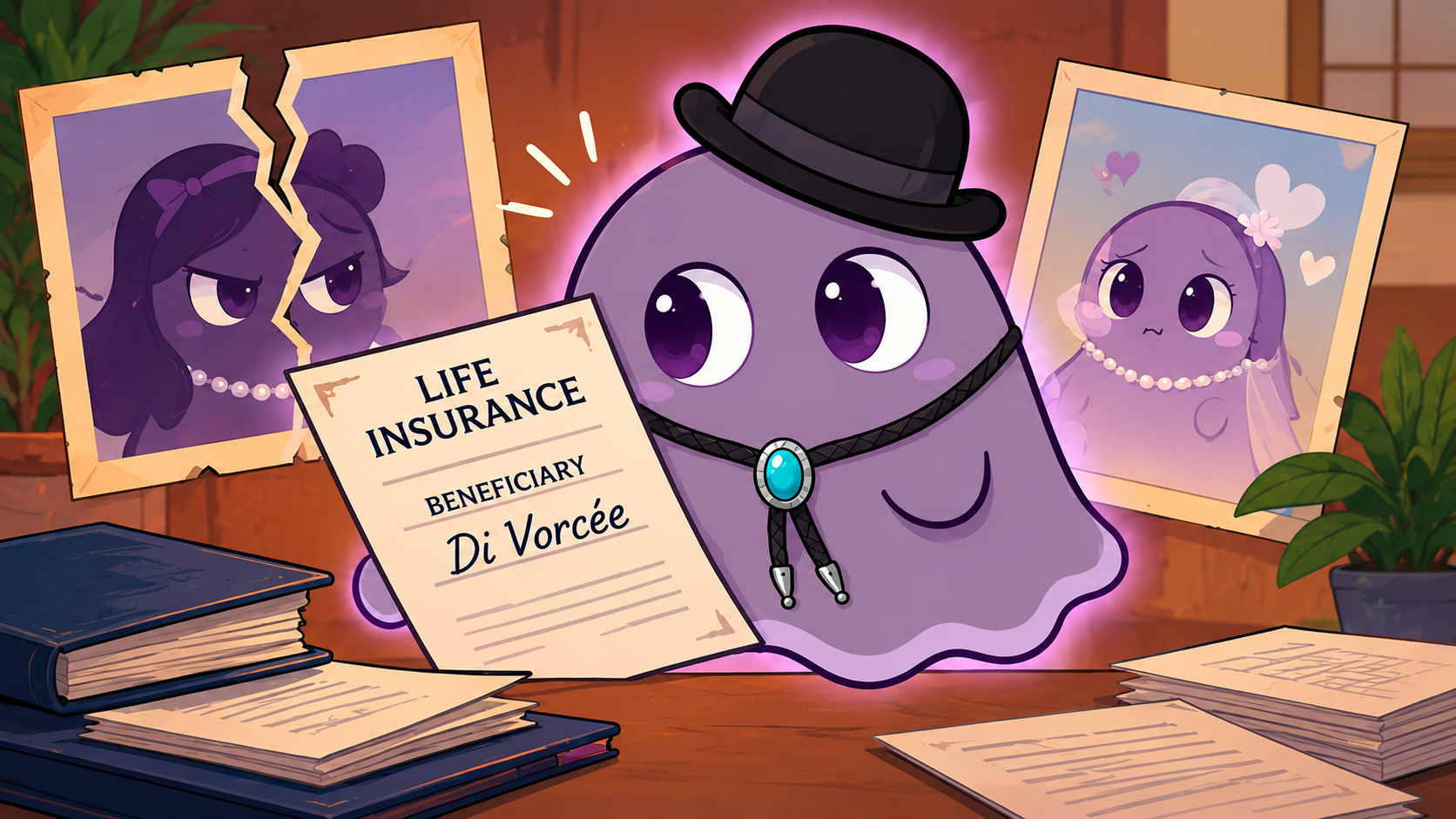
Es Tate soon died unexpectedly. Di Vorcée, still listed as the beneficiary, filed a claim with the insurer and collected the full payout: roughly $125,000. Tess Tator, the grieving widow, received nothing from the policy.
Tess sued. She had a strong argument on paper. The state statute said that a divorce automatically revokes an ex-spouse’s beneficiary designation. And even if the insurer had to pay the named beneficiary, that same state law gave the rightful recipient a claim to recover the money from the ex-spouse who collected it.
Tess lost. The Court unanimously held that the federal law governing federal employee life insurance preempted the state’s statute. Under the federal program, the named beneficiary gets the money, period. A state law can’t take it back from her after the fact.
Di Vorcée got the check.
The Legal Reality
Most states, including Arizona, have “revocation-on-divorce” statutes. In Arizona, A.R.S. § 14-2804 generally revokes any revocable gift to a former spouse, including beneficiary designations on life insurance and retirement accounts, once a divorce is final. The idea is simple: most people don’t want their ex-spouse to inherit, and the law presumes that forgetting to update a form was an oversight.
But state law has limits. When a benefit is governed by federal law, federal law wins. The proceeds go to the beneficiary the employee designated on file. Congress built the program around a bright-line rule so that insurers pay quickly and families can rely on the designation. Allowing states to redirect the money, whether before or after it is paid, would undermine that system. This principal applies to many federally governed benefits, including employer-sponsored retirement plans and group life insurance policies.
The Court acknowledged that the result may seem harsh, but it concluded that Congress had spoken clearly. The only person who could have prevented the outcome was Es Tate himself by filing a new designation form.
The Horror!
Es Tate didn’t make a bad choice so much as fail to make one at all. That’s what makes this horror story so common.
He assumed the divorce handled it.
Many people rightly assume that a divorce decree automatically removes an ex-spouse from everything. Sometimes state law does. But Es Tate’s benefit was federal, and the state safety net didn’t reach it.
He let the paperwork lag behind his life.
Es Tate had six years with Tess. Six years of opportunities to spend five minutes updating a form. That inaction cost $125,000.
He left his widow to fight uphill.
Instead of receiving the benefit quietly and quickly, Tess spent years in litigation against her husband’s ex-wife and still lost.
The common understanding is that a divorce separates the couple from each other’s finances completely. Es Tate would have wanted the $125,000 to go to his new wife. But the common understanding does not control. His specific wishes, which are shown through the form, do.
What Es Tate Should Have Done
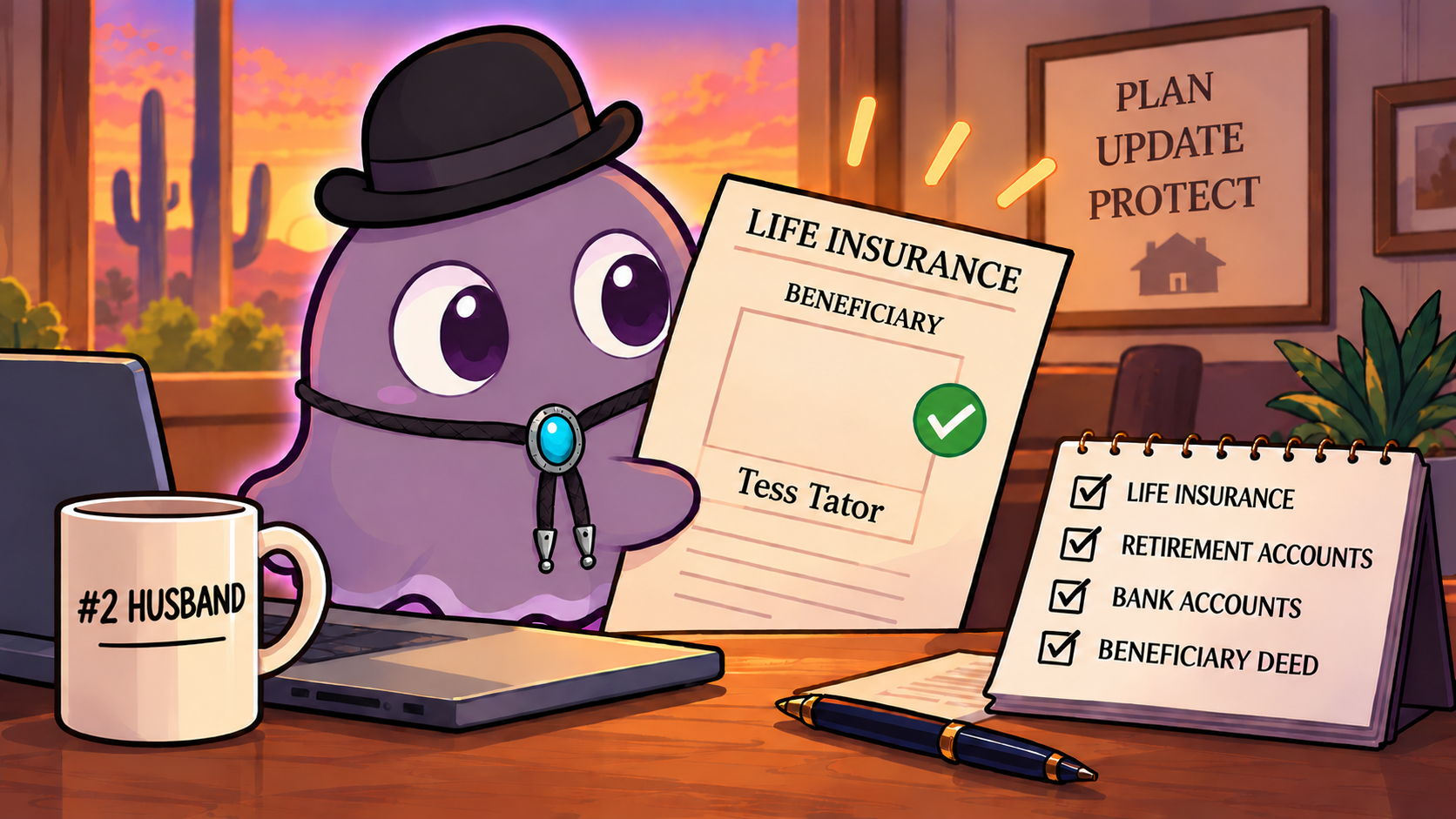
Updated every beneficiary form immediately after the divorce. Not just life insurance, but retirement accounts, bank accounts, investment accounts, and any beneficiary deeds.
Checked again after remarriage. Marriage is a trigger event. Es Tate should have named Tess as primary beneficiary and considered contingent beneficiaries as well. He then should have asked for written confirmation. Beneficiary changes should always be confirmed by the plan or insurer in writing and kept with his estate planning documents.
Coordinated the forms with his estate plan. An attorney reviewing his plan would have asked the simple question that saves families: “Who is listed on your life insurance?”
Not relied on state law to fix it. This was not a conscious decision, but the best argument Es Tate’s family had after his mistake. Revocation-on-divorce statutes can sometimes be a safety net. But they are certainly not a plan. And, as seen here, that net may have holes.
Conclusion
A beneficiary designation gives the asset to the person on the form. That’s exactly why they’re so useful. And, at the same time, so dangerous. Those forms pass their assets directly, outside of probate, to whoever is named, and in some cases no state law can undo it. One outdated signature from years ago can override everything you meant to do.
Don’t leave your loved ones with a horror story like Es Tate’s. If you’ve been divorced, remarried, or simply haven’t looked at your beneficiary forms in years, schedule your Free 30-Minute Peace of Mind Session with the Danza Law Office. 100% virtual and deeply personal, from anywhere in Arizona.
For a full rundown of how these forms and Arizona beneficiary deeds work, read our companion post, How Do Beneficiary Designations and Beneficiary Deeds Work in Arizona?
Until next time.
Es Tate is a fictional character, and his stories combine elements of several real court cases with names and details changed. This post is general education about Arizona law, not legal advice, and reading it doesn't create an attorney-client relationship. Every family's situation is different, so if Es Tate's story sounds a little too familiar, talk with an attorney about yours.
