
The Horrors of Es Tate’s Planning: The Will That Vanished
Es Tate did everything right. He hired a lawyer, signed a proper will, and took the original home for safekeeping. But what happens when that perfect plan cannot be found?

Meet Es Tate, our resident ghost. A well-meaning, dapper soul who made every estate planning mistake the rest of us can still avoid. He's fictional, but his horrors aren't. Each story is inspired by real court cases, with names and details changed for privacy.
The Facts
Es Tate was not a procrastinator. He tackled estate planning early and intensely. He met with an attorney, thought carefully about his legacy, and, when all was said and done, executed a properly witnessed will. Its contents were his last wishes. They were how he wanted to be remembered. Beyond the normal care for his family, he left generous gifts to charities he had supported for years and a large share to his longtime friend, Benny Phishiary. Es Tate’s attorney kept a copy for the file. Es Tate took the signed original home and passed in old age after a happy life.
Es Tate was an organized man, almost to a fault. He kept every tax return, every warranty, every receipt. So when he died, his family expected the will to turn up in minutes.
It didn’t.
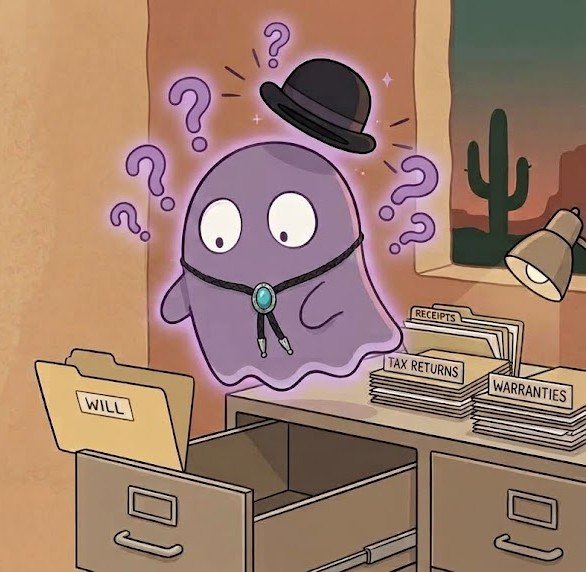
They searched his desk, his filing cabinets, his closets, and his safe. Nothing. The only will anyone could find was the photocopy in his attorney’s file.
That photocopy started a war.
Some of Es Tate’s family did not appreciate his generosity. Es Tate’s brother and sister claimed that the photocopy was not the will itself, so it could not be followed. Benny Phishiary and the charities said the original had simply been misplaced, and the copy proved exactly what Es Tate wanted. Es Tate’s brother and sister responded: a man who saved every receipt doesn’t lose his will. If the original was gone, it was because Es Tate got rid of it on purpose. And with no will, everything would pass to them as his closest relatives.
Everything. Instead of Es Tate’s assets following his wishes, they would follow the legislature’s.
The fight dragged on through hearings and appeals. Years upon years of fighting. And, in the end, the court sided with the family.
The will was treated as revoked, Es Tate was treated as if he had died without one, and the charities and Benny Phishiary walked away with nothing but a perfect copy of a will that no longer counted.
The Legal Reality
Under A.R.S. § 14-3415, if an original will that was last seen in the testator’s possession can’t be found after death, Arizona law presumes the testator destroyed it on purpose, intending to revoke it.
Why would the law assume that? Because destroying your own will is a perfectly legal way to revoke it. Under A.R.S. § 14-2507, burning, tearing, canceling, or destroying a will with the intent to revoke it does the job. So when a careful person’s original will vanishes from his own home, the law assumes he meant it: he burned, tore, canceled, or destroyed it. Unless the evidence says otherwise.
The presumption isn't the end of the story, but it flips the burden. Now the people named in the will have to prove it wasn't revoked. Maybe the testator talked about his will as still in force shortly before he died. Maybe a move, a flood, or a fire explains the loss. Maybe someone with access to it had a motive to make it disappear. Evidence like that can rebut the presumption.
But having to prove it at all is already a failure. The people Es Tate meant to provide for now have to fight for what he wanted them to have. And even if they win, they've lost time, money, and peace of mind fighting for what should have been theirs from the start.
Now picture the version where everything goes right. Es Tate’s original will sits somewhere safe and known: with his attorney, in a fireproof safe his Personal Representative can open. Or, even better, as an electronic will held by a Qualified Custodian, where it can’t be misplaced, mislabeled, or quietly thrown away. Where some other person has a legal duty to watch over it. After his death, the original goes to court, the will is probated, and his gifts reach the people and causes he chose.
The Horror!
Es Tate’s mistake wasn’t in planning his estate. It was in storing his will.
He did the hard part and fumbled the easy part. Planning, drafting, and signing took real effort, real time, real reflection. Keeping track of one folder should have been the simplest step of all.
He kept the only original where no one could find it. Nobody knew where Es Tate stored his will. Maybe he moved it. Maybe it was tossed with old paperwork. Maybe someone helped it disappear. The law doesn’t need to know which. It presumes the worst.
He trusted a copy to save him. A photocopy can prove what a will said. It can’t prove the will was still in force.
There's a special cruelty to this one. Es Tate's plan was perfect. The gifts were thoughtful, the will was properly signed and witnessed, and the copy in his attorney's file showed exactly what he wanted, word for word. None of it mattered. The law didn't ask what Es Tate wanted. It asked where the original went. Because nobody knew, the charities he'd supported for years got nothing, Benny Phishiary got nothing, and the people he'd chosen to get a little got everything. His plan failed because it just wasn't there.
What Es Tate Should Have Done
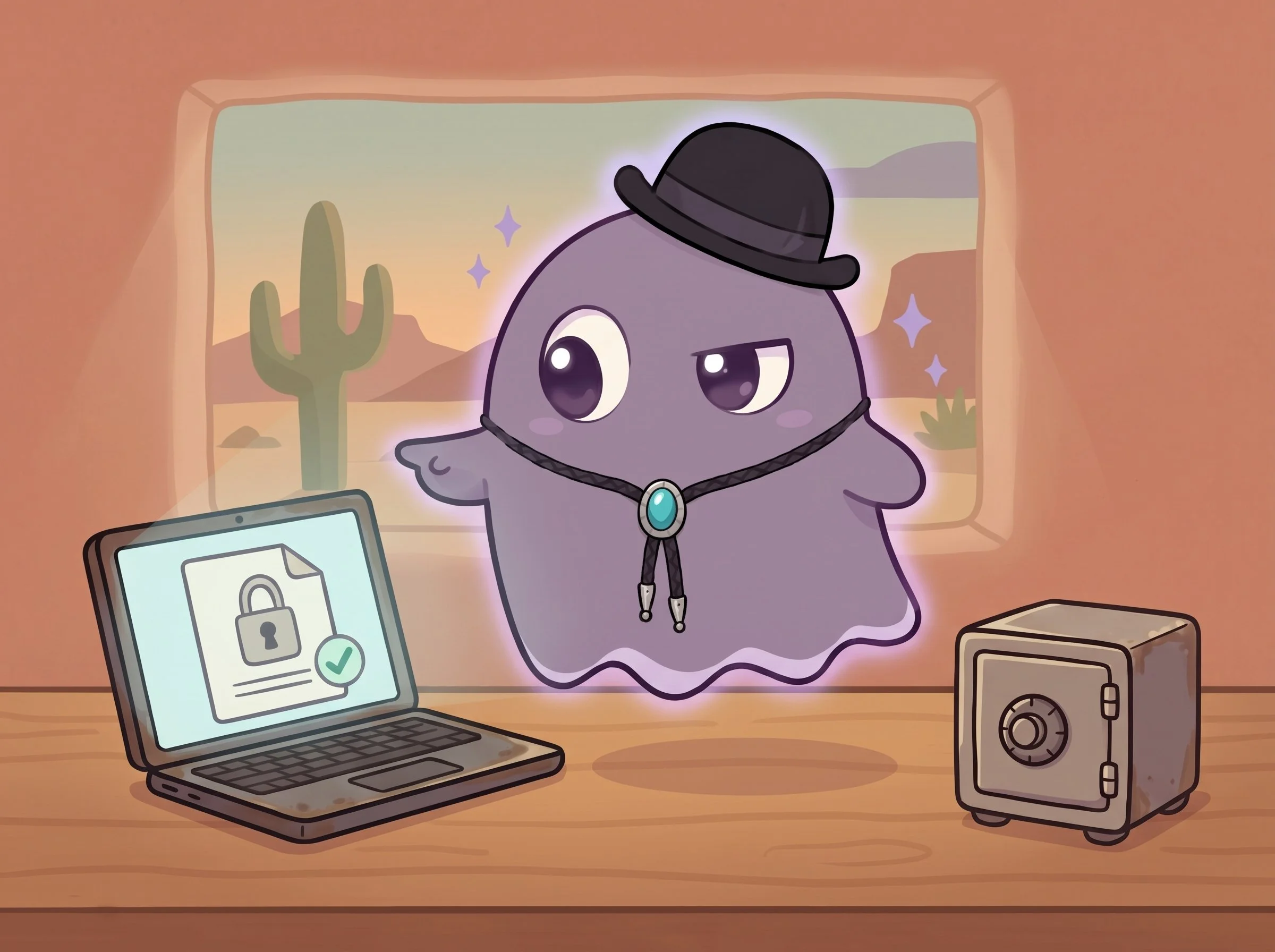
Told his Personal Representative exactly where the original was. A will no one can find is a will no one can use.
Stored it somewhere safe and accessible. A fireproof safe with shared access, or the attorney’s vault, beats a mystery drawer. A safe deposit box only works if someone else can get into it after you’re gone.
Considered an Arizona electronic will. Held by a Qualified Custodian, an e-Will can’t be lost in a move, buried in a closet, or swept out with the recycling.
Made any change of heart official. If Es Tate really did want to revoke his will, he should have done it clearly, with a new will, instead of leaving his family to guess what an empty folder meant.
Conclusion
The most carefully drafted will in the world is worth nothing if no one can find it. Your will isn’t finished when you sign it. It’s finished when the right person can put the original in front of a judge.
Don’t leave your loved ones with a horror story like Es Tate’s. If your original will is sitting in a drawer, a closet, or a box no one else knows about, schedule your Free 30-Minute Peace of Mind Session with the Danza Law Office. 100% virtual and deeply personal, from anywhere in Arizona.
For a full rundown of how Arizona electronic wills work, and why they can’t get lost, read our companion post, How Do Electronic Wills Work in Arizona?
Until next time.
Es Tate is a fictional character, and his stories combine elements of several real court cases with names and details changed. This post is general education about Arizona law, not legal advice, and reading it doesn't create an attorney-client relationship. Every family's situation is different, so if Es Tate's story sounds a little too familiar, talk with an attorney about yours.
